Autonomous Mission Planning for Robotics Systems
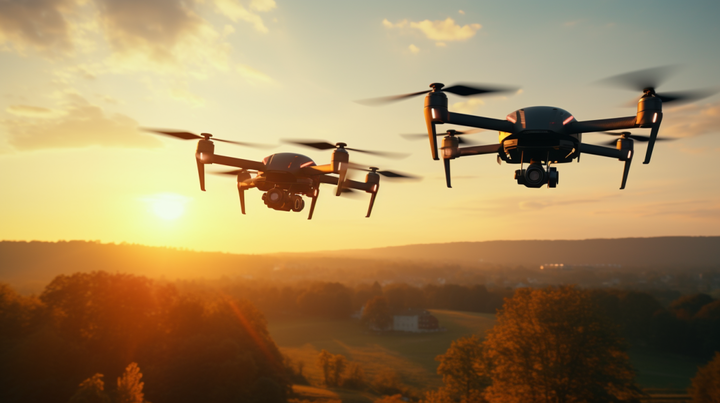
During the second half of my PhD research, I became increasingly fascinated with multi-agent robotics applications, especially for military applications. Coincidentally, I had also long aspired to start my own company. Thus, while still in the midst of my PhD research, I co-founded Droneconia LLC with Matt Carlin, Scott Fish, and Ufuk Topcu, a startup to develop autonomous mission planning solutions for robotics systems. In September 2022, we rebranded to Multi AI.
In the early conception stages of Multi AI, we focused on developing autonomous mission planning algorithms to help users quickly field multiple robots (aerial and ground) at once. Some of our efforts also included the exploration of these algorithms for loyal wingman scenarios, where large drones are paired with manned aircraft as extra defense layer. Without being able to go into detail, the following videos and this press release give a high-level idea.
The first video shows how our solution commands three Tello drones to execute a flipping command based on a simple voice command from a user.

The second video shows a loyal wingman simulation, where our solution autonomously plans waypoint missions for four unmanned aircraft that escort a manned aircraft. Our solution used a custom decentralized Monte Carlo Tree Search (MCTS) algorithm that processed high-level mission objectives from the user and computed the waypoint and command primitives that the drones executed.

Though our autonomous mission planning solution for robotic systems enjoyed success early on, we found that our military partners were more interested in applying our multi-agent AI capabilities to more general fleet planning and coordination problems in adversarial environments, which ultimately led to Multi-Agent Planning in Adversarial Environments.